
Compound interest is a fundamental concept in finance that significantly influences the growth of investments and the accumulation of wealth over time. It represents the process where interest is earned on both the initial principal and the accumulated interest from previous periods. This powerful mechanism can turn modest savings into substantial sums and is essential for anyone looking to enhance their financial well-being. With a clear understanding of the power of compound interest, individuals can make informed decisions about saving, investing, and managing debt to secure a more prosperous financial future.
Contents
The Basics of Compound Interest

Compound interest is what happens when interest is added to the principal, so from that moment on, the interest that has been added also earns interest. This can lead to exponential growth of your money over time. The formula for calculating compound interest is A = P(1 + r/n)^(nt), where A is the amount of money accumulated after n years, including interest, P is the principal amount, r is the annual interest rate, and n is the number of times that interest is compounded per year. Understanding this formula is crucial for anyone looking to grow their savings or investments effectively.
By leveraging compound interest, even small amounts of money can grow significantly over time. This is because each compounding period adds more interest to your investment, which in turn generates additional interest in the next period. It’s a powerful concept that underpins many investment strategies and savings accounts, emphasizing the importance of starting early to maximize the benefits of compounding.
The Magic of Compounding Over Time
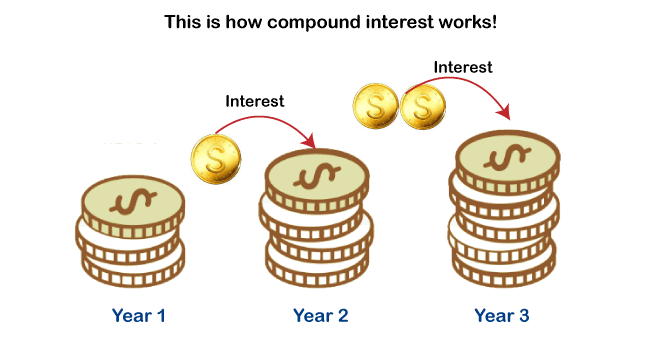
The true power of compound interest is revealed over the long term. The longer your money is invested or saved with compound interest, the greater the potential for exponential growth. This is because, with each passing year, the amount of interest that gets compounded grows, leading to increasingly larger amounts of money added to the principal.
This exponential growth means that the timing of your investment can be just as important as the amount invested. Starting early, even with smaller amounts, can lead to significantly larger gains over time due to the power of compound interest. This principle is what makes compound interest an indispensable tool for long-term financial planning and wealth accumulation.
Factors Influencing Compound Interest

Several key factors affect how compound interest works on your savings or investments. The principal amount, or the initial sum of money put into the investment or savings account, sets the stage for how much interest can accrue over time. A larger principal will naturally lead to more interest earned, but even small amounts can grow impressively with enough time.
The interest rate and the frequency of compounding are also crucial. Higher rates and more frequent compounding periods will accelerate the growth of your investment, allowing your money to grow more quickly. However, these factors vary widely across different financial products and institutions, highlighting the importance of shopping around for the best rates and understanding the terms of your investment.
Compound Interest in Savings Accounts

Savings accounts that offer compound interest provide a safe and steady way to grow your money. Unlike checking accounts, which typically do not offer significant interest earnings, savings accounts with compound interest can incrementally increase your balance over time. The key to maximizing this growth is to find accounts that offer high-interest rates and compound interest daily or monthly rather than annually.
However, the impact of compound interest in savings accounts is not just about the numbers; it also encourages a habit of saving. Knowing that your money will grow more effectively in a compounding account can motivate individuals to put aside more money regularly. This disciplined approach to saving can significantly enhance one’s financial stability and ability to meet long-term financial goals.